
Wild Horse
Lab.
Your kid paddles to the Salt River wild horse herd, observes from the federally-required 50-foot distance, and learns the citizen-science protocols biologists actually use. Pick the length that fits — a ½-day drop-in, a full Saturday, or the 6-week cohort that ends in a capstone defense.
Founder reads every inquiry · 48-hour reply · ESA · Scholarship · Adaptive paths
What the day actually
looks like.
A few moments from a real cohort Wednesday — bank observation, gear time with the AZ Waterways field ecology kit, the mega-board paddle. Every photo is on the actual Lower Salt corridor where the herd lives.
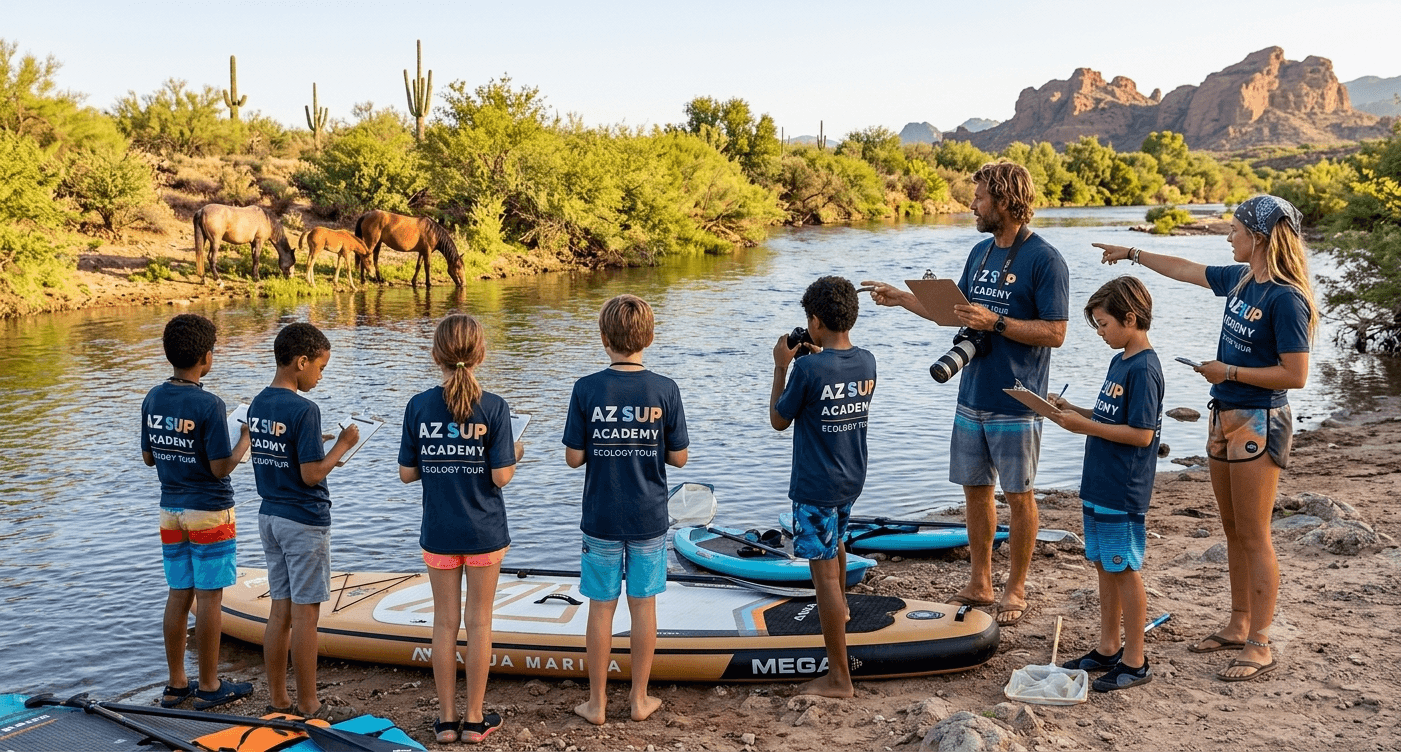
Bank-side observation · 50-foot federal approach rule enforced
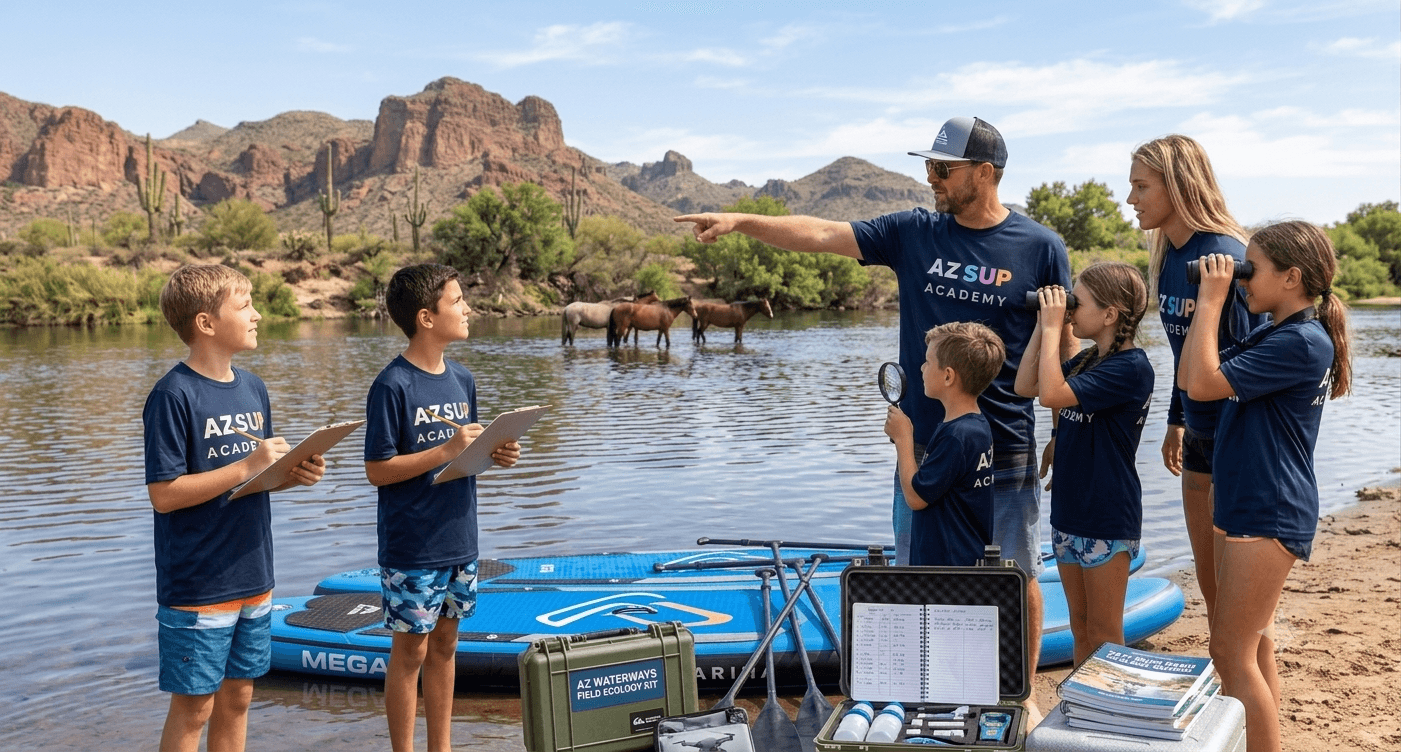
AZ Waterways Field Ecology Kit · binoculars, field journal, ID card
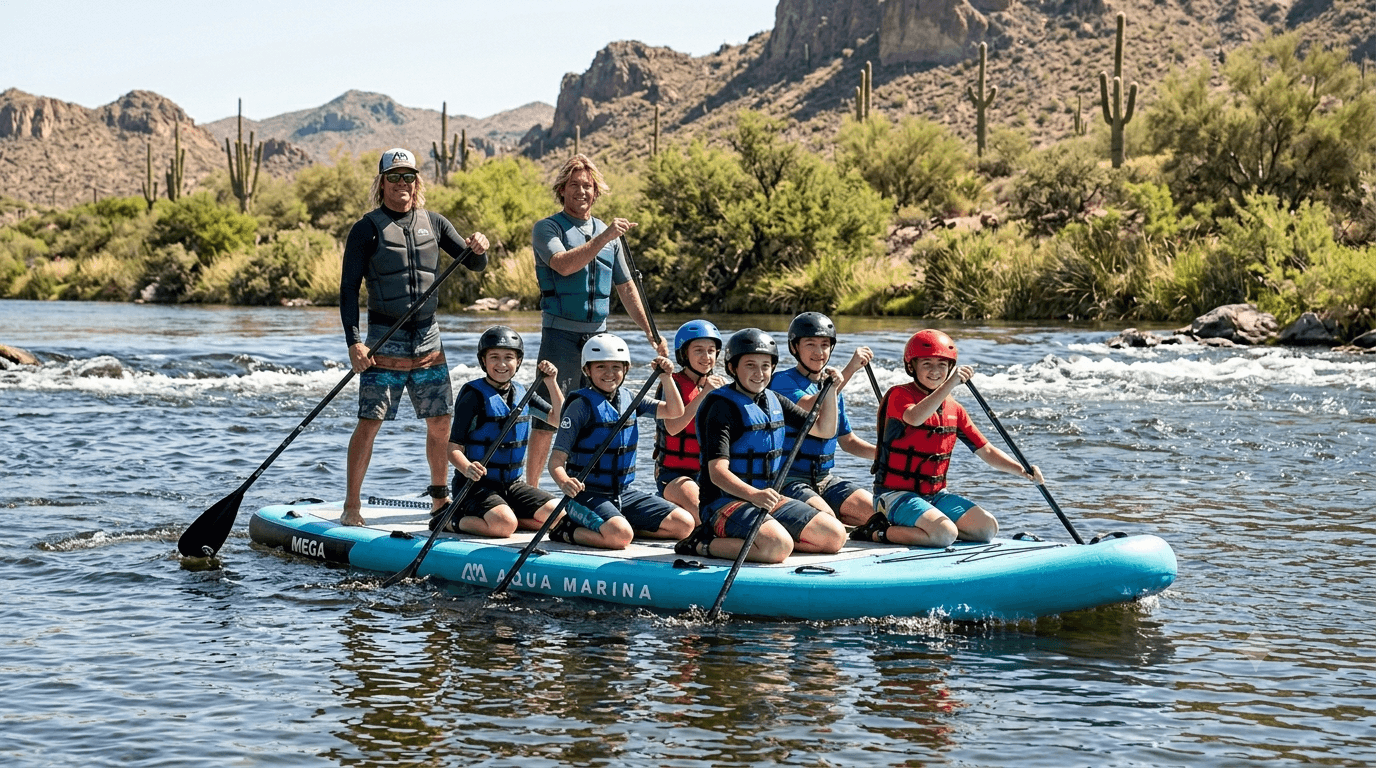
Mega-board river day · paddle to the next observation site
Three ways to do the
Wild Horse Lab.
Same instructors, same standards, three commitment levels. Tap a tab to see what's included, the mini-curriculum, the single tuition price, and the apply link for that length.
Get on the water and meet the herd.
A single 3-hour Saturday — paddle the Lower Salt to the wild horses’ watering territory, observe the federally-required 50-foot approach rule with a coach, and leave with one filled observation sheet. The cleanest on-ramp to the lab.
- USCG-fitted PFD + quick-release leash + 14′ board + paddle for the session
- AZ Waterways Field Ecology Kit on the bank — binoculars + species ID card
- One observation worksheet (yours to keep)
- Federal 50-foot approach rule taught + enforced by an ACA-credentialed coach
- Mega-board paddle option for paddlers who want a coach-piloted ride
- Sun-safety briefing + hydration check before launch
- Take-home photo bundle (Joshua emails within 48 hours)
- ESA · ClassWallet receipt issued by Monday
Curriculum3 phases · See syllabus
- On-shore (30 min)
- · PFD + leash fit · safety walkthrough
- · How to read the herd from a distance · stallion vs. mare body language
- · Federal 50-foot rule + why it matters
- On the water (1 hr 45 min)
- · Paddle to the observation cove · coast-and-return ~1 mile
- · Bank-side observation · binoculars + worksheet
- · Q+A with the coach on what the herd is actually doing
- Debrief (45 min)
- · Compare worksheets across the group
- · One thing you saw nobody else did · share-out
- · Receipt + photos delivered before you drive home
What your kid leaves withSee outcome
A real observation sheet with your kid’s name on it, one paddle session under their belt, and a confident "I want more" or "I’m done — that was fun." Either answer is the right one.
FAQFrequently asked questions (6)+
What ages can enroll?+
Will my student get to "pet" or get close to the horses?+
Why does this cohort exist right now?+
How is this different from the Saguaro Field School?+
What if my student is autistic, has ADHD, or has a sensory profile that makes 3 hours on the water hard?+
What does the student bring vs what do you provide?+
Still have questions? Text us — Joshua replies personally.
Curious where the observation data goes? See the partner directory →
Get on the water and meet the herd.
Reserve your seat or apply for scholarship — Joshua reads every enrollment and replies in 48 hours.
Arizona SUP Academy · 501(c)(3) determination pending · ClassWallet vendor (2027 cycle)